
Valentine
Esther Howland, 1847–70
About this artwork
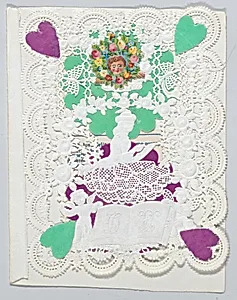
Step into the romantic world of mid-19th-century America *Valentine*, a delicate creation by Esther Howland, called the "Mother of the American Valentine Produced between 1847 and 1870, this petite ephemera—measuring just 2⅞ by 3⅞ inches—was part of Howland's innovative line of mass-produced greeting cards. At a time when Valentine's Day customs were gaining popularity in the U.S., her Worcester, Massachusetts, workshop transformed handmade European imports into affordable, heartfelt tokens of affection for everyday sweethearts. Howland's artistry shines through sophisticated techniques: cameo-embossing creates raised, sculptural motifs; open-work lace paper mimics intricate filigree; chromolithography adds vivid, printed colors; and layered colored paper builds depth. Classified in the Metropolitan Museum of Art's Drawings and Prints department as ornament and ephemera, it exemplifies the era's blend of craftsmanship and emerging industry, bridging folk art with commercial design. This gift from Mrs. Richard Riddell in 1981 preserves a slice of Victorian sentimentality, reminding us how such fleeting objects fueled a cultural obsession with romance. A testament to Howland's ingenuity, *Valentine* invites you to imagine it slipping from an envelope, hearts aflutter.