
Valmont and Emilie
Medium
color stipple and etching
Classification
Department
CG-E
Museum
National Gallery of Art, Washington, D.C.
Credit
Widener Collection
Accession Number
1942.9.2427
Rights
Public Domain
Art Historical Context
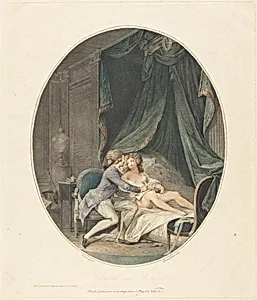
**Valmont and Emilie** *After Nicolas Lavreince by Romain Girard,1788* Color stipple and etching, Widener Collection, National Gallery of Art Step into the scandalous world of 18th-century French aristocracy with this captivating print, *Valmont and Emilie Created by Romain Girard after a design by Nicolas Lavreince just six years after Pierre Choderlos de Laclos's infamous epistolary novel *Les Liaisons Dangereuses* burst onto the literary scene in 1782, it depicts the seductive Vicomte de Valmont in a compromising moment with the innocent Emilie. This artwork captures the novel's themes of intrigue, desire, and moral decay among the nobility on the eve of the French Revolution, offering a visual echo of the era's libertine culture. Girard's masterful use of color stipple and etching techniques shines here. Stipple engraving, with its delicate dots creating soft gradations of tone and hue, was a revolutionary method in late 18th-century printmaking, allowing affordable, vibrant reproductions of paintings or designs. Combined with etching's precise lines, it produces a luminous, painterly effect that mimics oil paintings, making high art accessible to a wider audience. Lavreince, a noted illustrator of the time, specialized in such reproductive prints, bridging fine art and popular culture. Housed in the National Gallery of Art's Widener Collection, this piece highlights the print's role in disseminating literary sensations. Imagine visitors in 1788 poring over it, thrilled by its titillating narrative— a perfect snapshot of Enlightenment-era tensions between pleasure and peril. (218 words)