
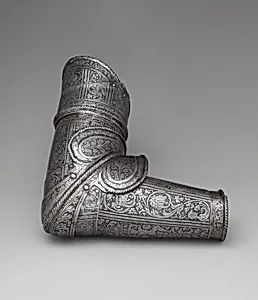
Vambrace (Arm Defense) for the Right Arm
Unknown Artist
ca. 1580–90
Medium
Steel
Dimensions
L. 19 in. (48.3 cm); W. 8 in. (20.3 cm)
Classification
Armor Parts
Culture
Italian
Department
Arms and Armor
Museum
Metropolitan Museum of Art, New York, NY
Credit
Fletcher Fund, 1921
Accession Number
21.139.11
Rights
Public Domain
Art Historical Context
Step into the world of Renaissance warfare with this exquisite *Vambrace (Arm Defense) for the Right Arm*, crafted in Italy around 1580–90. Made of high-quality steel, this forearm protector measures 19 inches long and 8 inches wide, designed to shield a knight or soldier during combat or tournaments. As part of a full suit of armor, vambraces like this were essential for defending against slashes and thrusts, reflecting the peak of Italian armorer's ingenuity during the late 16th century. Italian armor from this era was renowned for its balance of functionality and artistry, often produced in workshops in Milan or Brescia. The steel's durability allowed for thin yet resilient plates, enabling fluid movement while providing robust protection. Though the artist remains unknown, such pieces highlight the guild traditions of master craftsmen who hammered, polished, and fitted components with precision—transforming cold metal into wearable fortresses. Today, this vambrace graces the Metropolitan Museum of Art's Arms and Armor Department, acquired through the Fletcher Fund in 1921. It offers a tangible glimpse into the chivalric culture of Renaissance Europe, where armor symbolized status, skill, and survival on the battlefield. A reminder that even in violence, human creativity shone through.