
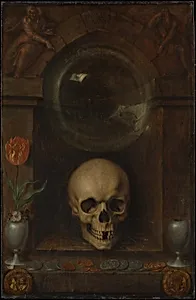
Vanitas Still Life
Medium
Oil on wood
Dimensions
32 1/2 x 21 1/4 in. (82.6 x 54 cm)
Classification
Paintings
Department
European Paintings
Museum
Metropolitan Museum of Art, New York, NY
Credit
Charles B. Curtis, Marquand, Victor Wilbour Memorial, and The Alfred N. Punnett Endowment Funds, 1974
Accession Number
1974.1
Rights
Public Domain
Tags
Art Historical Context
Jacques de Gheyn II's *Vanitas Still Life*1603), an oil on wood panel measuring 32½ × 21¼ inches, exemplifies the early mastery of the vanitas genre Northern European art. Painted during the Dutch Golden Age's formative years, this work by the Dutch artist—renowned for his intricate botanical and symbolic compositions—captures everyday objects arranged with hyper-realistic precision. The choice of wood panel allowed for the fine brushwork that renders textures like delicate petals and metallic gleam with astonishing clarity, a technique that influenced later still-life masters. At its heart, the painting embodies the vanitas tradition, a Protestant meditation on life's fleeting nature. Symbols abound: a skull evokes *memento mori* (remember death), wilting flowers highlight beauty's transience, scattered coins warn against worldly greed, and vases underscore fragility. These motifs, rooted in 17th-century moral philosophy amid religious upheavals, remind viewers of mortality and vanity. Housed in the Metropolitan Museum of Art, this piece marks Gheyn's pivotal role in elevating still life from mere decoration to profound allegory, bridging Flemish realism and emerging Dutch innovation. A timeless prompt for reflection, it invites us to ponder what truly endures.