
Varie figure gobbi di Jacopo Callot
1621 - 1625
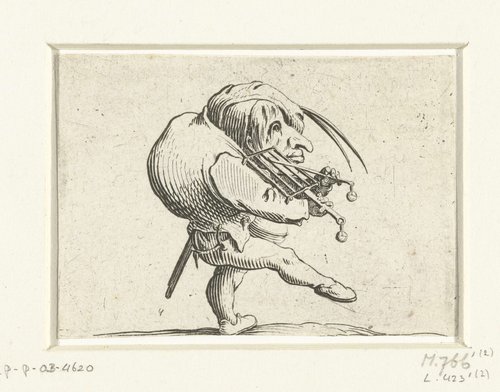
Medium
etching
Dimensions
64; 91
Rights
Public Domain
About this artwork
collector's mark: Lugt 240
Art Historical Context
Jacques Callot's *Varie figure gobbi Jacopo Callot*Various Hunchbacked Figures), between 1621 and1625, exemplifies the artist's mastery of etching during the early Baroque period. A French printmaker who trained in Italy and adopted the Italianate name Jacopo, Call was renowned for his intricate depictions of everyday life, festivals, and the grotesque. This small-scale etching, measuring just 64mm high by 91mm wide, belongs to his celebrated *Gobbi* series, portraying hunchbacked figures in dynamic, exaggerated poses that blend caricature with acute observation. Etching, Callot's preferred medium, allowed him to achieve unprecedented detail and fluidity in line work through a process of biting acid into a metal plate. His innovative use of multiple biting stages created rich tonal variations and swelling lines, influencing generations of printmakers like Rembrandt. These tiny yet vivid scenes capture the theatrical energy of commedia dell'arte performers, reflecting 17th-century fascination with the marginalized and fantastical. Bearing a collector's mark (Lugt 240), this print highlights Callot's enduring appeal to connoisseurs. It offers a window into the vibrant street life of Renaissance Europe, inviting viewers to marvel at the artist's technical brilliance and wry social commentary in a format small enough to carry in a pocket.
About the Artist
Jacques Callot · 1592–1635
Jacques Callot (1592–1635) was a French printmaker and draftsman from the Duchy of Lorraine, widely regarded as one of the first great artists to practice the graphic arts exclusively. His more than 1,400 etchings chronicled the breadth of 17th-century life, from Medici court festivities to the brutal realities of warfare. Callot revolutionized etching through technical innovations including the é...