
Vase
Adam Friedrich von Löwenfinck|Meissen Manufactory, ca. 1735
About this artwork
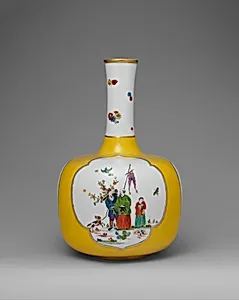
This exquisite vase, crafted around 1735 by painter Adam Friedrich von Löwenck at the renowned Me Manufactory, exemplifies the pinnacle of early European porcelain artistry. Standing nearly 16 inches tall, it is made of hard-paste porcelain—a technical breakthrough pioneered by Meissen 1710, which allowed Germany to rival China's centuries-old monopoly on true porcelain. The vase's surface bursts with vibrant polychrome enamels and intricate gold accents, showcasing Löwenfinck's mastery in overglaze painting techniques that fired at lower temperatures to fix colorful pigments and metallic lusters without warping the delicate body. Meissen porcelain marked a cultural revolution in 18th-century Europe, transforming luxury tableware and decorative objects into status symbols for royalty and aristocracy. Löwenfinck, a leading Hausmaler (outside decorator), brought dynamic figural scenes to life here, likely featuring lively motifs of rabbits, birds, men, and dogs amid bucolic or fanciful settings. These whimsical elements reflect the Rococo era's delight in nature and playful narratives, blending realism with decorative flair. Part of The Lesley and Emma Sheafer Collection at The Metropolitan Museum of Art, this vase invites visitors to appreciate how Meissen elevated ceramics to fine art, influencing porcelain production across Europe for generations.