
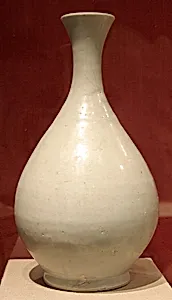
Vase
Unknown Artist
15th–16th century
Medium
White stoneware with translucent glaze
Dimensions
H. 11 1/2 in. (29.2 cm)
Classification
Ceramics
Culture
Vietnam
Department
Asian Art
Museum
Metropolitan Museum of Art, New York, NY
Credit
Gift of Betty and John R. Menke, 1992
Accession Number
1992.72.4
Rights
Public Domain
Art Historical Context
This elegant vase, crafted in Vietnam during the 15th–16th, exemplifies the refined ceramic traditions of the Lê Dynasty era. Standing at 11½ inches (29.2 cm) tall, it is made of white stoneware—a durable, high-fired clay body that provided a smooth, porcelain-like surface prized for its strength and subtle beauty. The translucent glaze, a hallmark of skilled Vietnamese potters, allows light to pass through gently, creating a luminous effect that enhances the vase's graceful form and elevates it beyond mere utility. Vietnam's ceramics from this period reflect a golden age of artistic innovation and maritime trade, with kilns in regions like Bát Tràng producing wares influenced by Chinese techniques yet distinctly Vietnamese in their bold shapes and subtle elegance. White stoneware with clear glazes was especially valued for both domestic use and export to Southeast Asia and beyond, showcasing the culture's mastery of kilns capable of reaching temperatures over 1,200°C. Though the artist remains unknown, such pieces highlight anonymous artisans' expertise in balancing form, fire, and finish. Today, this vase graces the Metropolitan Museum of Art's Asian Art Department, a generous gift of Betty and John R. Menke in 1992. It invites visitors to appreciate the timeless allure of Vietnamese craftsmanship, bridging centuries of cultural exchange.