
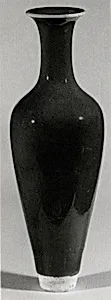
Vase
Unknown Artist
1713–22
Medium
Porcelain with peach-bloom glaze (Jingdezhen ware)
Dimensions
H. 2 7/8 in. (7.3 cm); Diam. 4 1/16 in. (10.3 cm)
Classification
Ceramics
Culture & Period
China · Qing dynasty (1644–1911), Kangxi mark and period (1662–1722)
Department
Asian Art
Museum
Metropolitan Museum of Art, New York, NY
Credit
Gift of Edwin C. Vogel, 1966
Accession Number
66.206.7
Rights
Public Domain
Art Historical Context
This exquisite small vase, crafted between 1713 and 1722 during the Kangxi period of China's Qing dynasty (16441911), exemplifies the of imperial porcelain production. Bearing the Kangxi reign mark, it hails from Jingdezhen, the renowned of Chinese ceramics where potters perfected high-fired porcelain for the imperial court. Standing just 2⅞ inches tall with a 4⅛-inch diameter, its petite scale suggests it may have served as a snuff, incense holder, or decorative object for the elite. The vase's standout feature is its peach-bloom glaze—a masterful technique yielding a soft, translucent pink hue reminiscent of blooming peach blossoms at dawn. Developed in Jingdezhen kilns, this glaze involved precise copper oxide application and controlled firing in dragon kilns, creating a luminous, mottled effect prized by collectors for its rarity and subtlety. Such wares symbolized refinement and imperial taste, reflecting the Kangxi emperor's patronage of the arts amid economic prosperity. Today, this gift to the Metropolitan Museum of Art from Edwin C. Vogel in 1966 invites us to appreciate the technical virtuosity of anonymous artisans whose innovations influenced global ceramics for centuries. A true gem of Asian Art!