
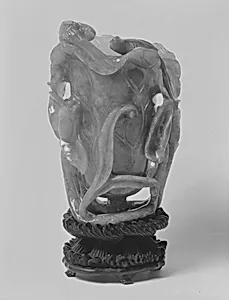
Vase
Unknown Artist
18th century
Medium
Jade
Dimensions
H. 4 1/2 in. (11.4 cm)
Classification
Jade
Culture & Period
China · Qing dynasty (1644–1911)
Department
Asian Art
Museum
Metropolitan Museum of Art, New York, NY
Credit
Bequest of Mary Stillman Harkness, 1950
Accession Number
50.145.89
Rights
Public Domain
Art Historical Context
This exquisite jade vase, crafted in 18th-century China during the Qing dynasty (164–1911), exemplifies era's mastery of lapidary arts. Standing just 4½ inches (11.4 cm) tall, its petite scale suggests it was likely a scholar's object or a decorative treasure for an elite collection, where such items symbolized refinement and harmony with nature. The translucent green jade, prized for its and luster, was meticulously carved and polished to highlight the stone's natural veining and glow, a technique honed in imperial workshops. In Chinese culture, jade held profound significance as the "stone of heaven," embodying virtues like immortality, integrity, and imperial authority. Qing artisans elevated jade carving to new heights, often drawing from archaic bronze forms or natural motifs to evoke timeless elegance. This vase, though by an unknown artist, reflects the dynasty's opulent aesthetic, blending functionality with philosophical depth—vases like this might have held flowers in scholarly studios or served as ritual displays. Generously bequeathed to the Metropolitan Museum of Art in 1950 by Mary Stillman Harkness, it now invites visitors to appreciate the enduring allure of Qing jade craftsmanship, a testament to China's artistic legacy.