
Vase
Unknown Artist
17th century
Medium
Stonepaste; luster-painted
Dimensions
Ht. 6 1/2 in. (16.5 cm) W. 5 1/16 in. (12.8 cm)
Classification
Ceramics
Department
Islamic Art
Museum
Metropolitan Museum of Art, New York, NY
Credit
Edward C. Moore Collection, Bequest of Edward C. Moore, 1891
Accession Number
91.1.162
Rights
Public Domain
Art Historical Context
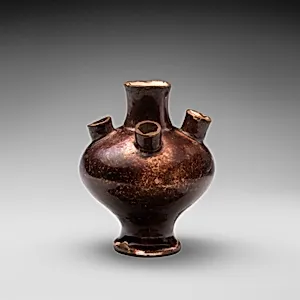
This exquisite 17th-century vase crafted by an unknown artist, exemplifies the refined artistry of Islamic ceramics. Standing just 6 1/2 inches tall 5 inches wide, its modest size belies its elegant form, likely designed for displaying flowers or as a table ornament in a wealthy household. Housed in the Metropolitan Museum of Art's of Islamic Art, it the collection through the generous bequest of Edward C. in 1891. The vase's medium—stonepaste, also known as fritware—represents a hallmark innovation of Islamic potters, developed as early as the 10th century in regions like Iran and Syria. This composite body of quartz, clay, and glass frit fired to a brilliant white allowed for thin walls and intricate designs rivaling Chinese porcelain, which was highly prized but scarce in the Islamic world. The standout feature is its luster-painting technique: metallic oxides applied over a glazed surface and fired in a reducing atmosphere to produce a shimmering, iridescent gold effect that dances with light. Revived in the 17th century after earlier peaks, this method showcased technical mastery and luxury, often reserved for elite patrons. Such vases highlight the cultural flourishing of the Safavid or Ottoman eras, blending functionality with poetic beauty. Visitors can appreciate how this piece captures the Islamic tradition of transforming everyday objects into treasures of light and color.