
Vase
Unknown Artist
probably 18th–19th century
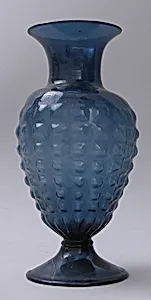
Medium
Glass; mold blown, applied foot
Dimensions
H. 7 1/8 in. (18.1 cm) Diam. 3 1/2 in. (8.9 cm) Wt. .2670 lbs. (0.121109 kg)
Classification
Glass
Department
Islamic Art
Museum
Metropolitan Museum of Art, New York, NY
Credit
Edward C. Moore Collection, Bequest of Edward C. Moore, 1891
Accession Number
91.1.1562
Rights
Public Domain
Art Historical Context
This delicate glass vase, likely crafted in the 18th or 19th century, the refined artistry of Islamic glassmaking traditions. Hailing from the Islamic world—possibly regions like the Ottoman Empire or Persia—such vessels were prized for both practical use and aesthetic beauty in domestic settings. Standing just 7⅛ inches tall with a 3½-inch diameter, its modest scale belies its elegant proportions, making it a perfect example of the subtle luxury found in everyday Islamic decorative arts during this period. The vase was created using mold-blowing, a sophisticated technique where molten glass is blown into a patterned mold to impart textured designs or facets, followed by the addition of a separate applied foot for stability. This method, rooted in centuries-old Islamic innovations, allowed artisans to achieve intricate surface effects efficiently while highlighting the glass's inherent translucency and luster. Such pieces reflect the technical mastery of Islamic glassworkers, who advanced mold-blown wares from medieval times into the modern era. Now part of the Metropolitan Museum of Art's Edward C. Moore Collection (bequeathed in 1891), this anonymous masterpiece invites visitors to appreciate the anonymous genius behind Islamic crafts. Gaze closely to imagine it once holding flowers or perfumes in a bustling bazaar or serene harem.