
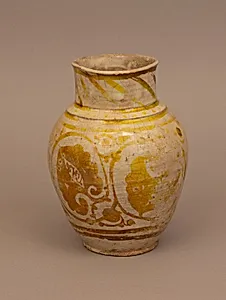
Vase
Unknown Artist
late 11th–early 12th century
Medium
Earthenware; glazed and luster-painted
Classification
Ceramics
Department
Islamic Art
Museum
Metropolitan Museum of Art, New York, NY
Credit
Rogers Fund, 1922
Accession Number
22.49.2
Rights
Public Domain
Art Historical Context
This elegant vase, crafted by an unknown artist in the 11th to early 12th century exemplifies the pinnacle of medieval Islamic ceramic artistry. Hailing from the Islamic world—likely Persia or Syria during the Seljuk era—it reflects a period of cultural flourishing under expanding empires, where pottery became a canvas for innovation and trade. Acquired through the Rogers Fund in 1922, it now graces the Metropolitan Museum of Art Islamic Art department, showcasing everyday luxury for elite households. The vase's medium—earthenware coated in glaze and adorned with luster-painting—is particularly noteworthy. Lusterware, a technique perfected by Islamic potters around the 9th century, involves applying metallic oxides to the glazed surface and firing in a low-oxygen kiln to create a shimmering, iridescent gold or coppery glow. This labor-intensive process mimicked costly metalwork, making ceramics accessible symbols of wealth and sophistication. Though patterns aren't detailed here, such vases often featured swirling florals, geometric motifs, or calligraphy, blending artistry with spiritual symbolism. For visitors, this piece whispers of ancient workshops alive with fire and ingenuity, bridging East and West through Silk Road exchanges. A testament to Islamic contributions to global design, it invites us to marvel at how humble clay captured light and legacy.