
Vase
Unknown Artist
1830
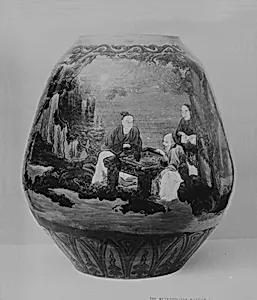
Medium
Porcelain decorated with colored enamels (Ao Kutani style)
Dimensions
H. (with cover)14 1/4 in. (36.2 cm)
Classification
Ceramics
Culture & Period
Japan · Edo period (1615–1868)
Department
Asian Art
Museum
Metropolitan Museum of Art, New York, NY
Credit
Gift of Mrs. V. Everit Macy, 1923
Accession Number
23.225.226
Rights
Public Domain
Tags
Art Historical Context
This elegant porcelain vase, created around 1830 during Japan's Edo period (1615–1868), exemplifies the refined artistry of Ao Kutani style ceramics. Standing 14¼ inches tall with its cover, it is decorated with vibrant colored enamels applied over the glaze—a technique that allowed for bold, multifaceted hues fired at lower temperatures to preserve intricate details. Housed in the Metropolitan Museum of Art's Asian Art Department, it was generously gifted by Mrs. V. Everit Macy in 1923. Kutani ware, originating from Ishikawa Prefecture, gained prominence in the 17th century for its exuberant overglaze enamels, blending Chinese porcelain influences with Japanese aesthetic sensibilities. The "Ao" (blue) variant typically emphasizes cobalt blues, but this piece's colored enamels expand the palette, showcasing the evolution of the style in the late Edo era—a time of cultural flourishing, urban prosperity, and sophisticated craftsmanship amid Japan's isolationist policies. Likely featuring depictions of men—perhaps in narrative scenes reflecting Edo society's interests in theater, daily life, or folklore—this vase highlights porcelain's role as both functional art and status symbol. Its preservation offers a window into Japan's ceramic mastery, bridging utility and opulence for collectors worldwide.