
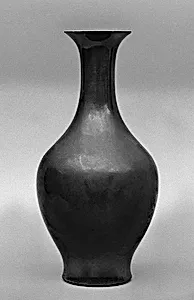
Vase
Unknown Artist
18th century
Medium
Porcelain with coral red glaze (Jingdezhen ware)
Dimensions
H. 7 3/4 in. (19.7 cm)
Classification
Ceramics
Culture & Period
China · Qing dynasty (1644–1911)
Department
Asian Art
Museum
Metropolitan Museum of Art, New York, NY
Credit
Gift of Philip A. Rollins, 1946
Accession Number
46.39.6
Rights
Public Domain
Art Historical Context
This elegant vase, crafted in 18th-century China during the Qing dynasty1644–1911), exemplifies the unparalleled porcelain artistry of Jingdezhen, the imperial kilns renowned as the "porcelain capital of the world Standing at 7 3/4 inches (19.7 cm) tall, it a striking coral red glaze—a sophisticated monochrome technique where copper oxide in the glaze fired to produce a vivid, jewel-like crimson hue. This method demanded precise control over kiln temperatures, often resulting in subtle variations that highlight theists' mastery. Qing porcelain like this vase was prized for both domestic elegance and export luxury, reflecting the era's prosperity under emperors like Qianlong, who championed refined aesthetics. The coral red glaze, popular in imperial wares, symbolized opulence and harmony, evoking the sea's treasures or auspicious red in Chinese culture. Though the artist remains unknown, such pieces underscore Jingdezhen's role in global trade, influencing European ceramics. A generous gift from Philip A. Rollins in 1946, this vase now graces the Metropolitan Museum of Art's Asian Art collection, inviting visitors to appreciate the timeless allure of Chinese ceramic innovation.