
Vase
Unknown Artist
early 18th century
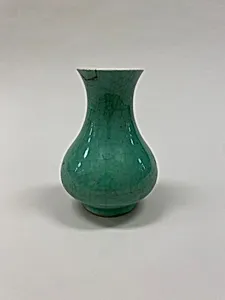
Medium
Porcelain painted with crackled green glaze (Jingdezhen ware)
Dimensions
H. 5 1/4 in. (13.3 cm); Diam. 3 7/8 in. (9.8 cm)
Classification
Ceramics
Culture & Period
China · Qing dynasty (1644–1911)
Department
Asian Art
Museum
Metropolitan Museum of Art, New York, NY
Credit
Bequest of Benjamin Altman, 1913
Accession Number
14.40.256
Rights
Public Domain
Art Historical Context
This exquisite porcelain vase, crafted in Jingdezhen—the renowned imperial kilns of China—dates to the early 18th century during the Qing dynasty (164–1911). Standing just 5¼ inches tall with a diameter of 3⅞ inches, its petite form suggests it was designed for intimate display, perhaps in a scholar's studio or on an altar. The crackled green glaze, a hallmark of masterful ceramic technique, features fine, intentional fissures that catch the light, evoking the subtle beauty of jade or ancient bronzes prized in Chinese aesthetics. Jingdezhen porcelain represented the pinnacle of technical innovation in the Qing era, with potters achieving translucent bodies and vibrant glazes through high-temperature firing in dragon kilns. The crackle effect, created by mismatched cooling rates between clay and glaze, added a sense of organic imperfection and depth, symbolizing the harmony of nature. Green glazes like this echoed Song dynasty celadons, blending tradition with imperial refinement under emperors like Kangxi. A generous bequest from Benjamin Altman brought this treasure to The Metropolitan Museum of Art in 1913, where it exemplifies China's enduring ceramic legacy. Visitors, imagine its cool glaze under your fingertips—a window into Qing opulence.