
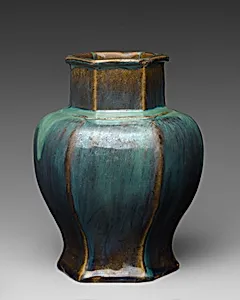
Vase
Unknown Artist
early 19th century
Medium
Clay covered with a mottled glaze
Dimensions
H. 7 1/2 in. (19.1 cm)
Classification
Ceramics
Culture & Period
Japan · Edo period (1615–1868)
Department
Asian Art
Museum
Metropolitan Museum of Art, New York, NY
Credit
Edward C. Moore Collection, Bequest of Edward C. Moore, 1891
Accession Number
91.1.232
Rights
Public Domain
Art Historical Context
This elegant vase, crafted in early 19th-century Japan during the Edo period1615–1868), exemplifies the refined ceramic artistry of a time when peace and prosperity fueled artistic innovation. Standing at just 7½ inches (19.1 cm) tall, it is formed from clay and coated with a mottled glaze—a technique that produces a textured, variegated surface resembling natural stone or landscapes, evoking Japan's deep appreciation for wabi-sabi aesthetics of imperfection and transience. Edo-period ceramics often served both practical and decorative purposes in tea ceremonies, flower arrangements (ikebana), or household altars, blending functionality with subtle beauty. The unknown artisan's mastery of glaze application highlights advanced kiln techniques, where iron-rich slips created unpredictable, earthy patterns during firing— a hallmark of Japanese pottery traditions like those from regions such as Seto or Kutani. Acquired as part of the Edward C. Moore Collection and bequeathed to the Metropolitan Museum of Art in 1891, this vase offers a window into Japan's pre-industrial elegance, inviting visitors to ponder the hands that shaped it amid an era of cultural flourishing.