
Vase
Unknown Artist
A.D. 2nd–3rd century
Medium
Glass
Dimensions
H. 5.9 × Dia. 5.5 cm (2 5/16 × 2 3/16 in.)
Classification
Vase
Period
Roman Period
Department
Egyptian Art
Museum
Metropolitan Museum of Art, New York, NY
Credit
Rogers Fund, 1924
Accession Number
24.2.38
Rights
Public Domain
Art Historical Context
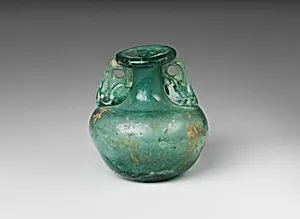
This delicate glass vase, crafted by an unknown artist during Egypt's Roman Period (A.D. 2nd–3rd century), exemplifies the everyday artistry of the ancient Mediterranean world. Standing just 5.9 cm tall with a diameter of 5.5 cm, it likely served as a container for perfumes, oils, or cosmetics—common luxuries in Roman households. Acquired through the Rogers Fund in 1924 and now housed in the Metropolitan Museum Art's Department of Egyptian Art, it a glimpse into the fusion of Egyptian traditions and Roman innovation following Cleopatra's defeat in 30 B.C. Glassmaking reached new heights in this era, with techniques like free-blowing and molding enabling mass production of such translucent vessels. Egypt, a hub for glass production alongside Syria and Italy, exported these items empire-wide, making fine glass accessible beyond the elite. The vase's simple, elegant form highlights the material's optical qualities—its clarity and iridescence capturing light in ways pottery could not—symbolizing Roman technological prowess and cultural exchange. Though unadorned, this modest artifact underscores the vibrancy of Roman Egypt's domestic life, where beauty permeated the ordinary. Visitors can appreciate how such small objects bridged utility and aesthetics in antiquity.