
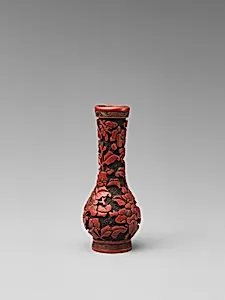
Vase
Unknown Artist
18th century
Medium
Lacquer
Dimensions
Storage: 4 5/16 x 1 11/16 in. (11 x 4.3 cm)
Classification
Lacquer
Culture & Period
China · Qing dynasty (1644–1911)
Department
Asian Art
Museum
Metropolitan Museum of Art, New York, NY
Credit
Edward C. Moore Collection, Bequest of Edward C. Moore, 1891
Accession Number
91.1.668
Rights
Public Domain
Tags
Art Historical Context
This exquisite small vase, crafted in the 18th century during China's Qing dynasty (16441911), exemplifies the artistry of imperial lacquerware. Standing just 4 5/16 inches tall and 1 11/16 inches wide, it belongs to the Metropolitan Museum of Art's Asian Art collection, gifted through the Edward C. Moore in 1891. Though the artist remains unknown, such objects were often produced in workshops patronized by the court or elite, showcasing the era's mastery of lacquer—a durable, glossy medium derived from the sap of the lacquer tree. Lacquer techniques in Qing China involved laboriously applying dozens of thin layers, which were polished, carved, or inlaid with pigments and materials like mother-of-pearl for vibrant effects. Floral motifs, as seen here, were immensely popular, symbolizing prosperity, renewal, and harmony in Chinese culture. These designs not only adorned homes and altars but also served practical purposes, like holding incense or cosmetics, blending utility with opulent beauty. Today, this delicate vase invites us to appreciate the Qing artisans' patience and skill, a testament to China's enduring tradition of decorative arts that influenced global design.