
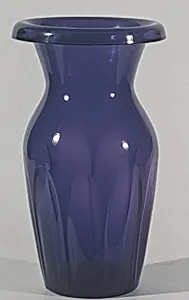
Vase
Unknown Artist
1763–74
Medium
Blown pattern-molded amethyst glass
Dimensions
H. 6 3/4 in. (17.1 cm)
Classification
Vase
Culture
American
Department
The American Wing
Museum
Metropolitan Museum of Art, New York, NY
Credit
The Sylmaris Collection, Gift of George Coe Graves, 1930
Accession Number
30.120.303
Rights
Public Domain
Art Historical Context
This exquisite amethyst glass vase, between 1763 and 1774, captures the budding sophistication of colonial American craftsmanship. Standing a modest 6 3/4 inches (17.1 cm) tall, its vibrant purple hue—achieved through manganese impurities in the glass—glows with subtle elegance, making it a cherished example of everyday luxury in pre-Revolutionary households. The vase was fashioned using the blown pattern-molded technique, skilled process where molten glass is blown into a mold engraved with decorative patterns, imprinting textures like ribs or diamonds before further shaping. Popular in early American glasshouses, such as those in New Jersey and New England, this method allowed artisans to produce intricate designs efficiently without relying heavily on imported European wares, highlighting growing colonial self-sufficiency. Housed in The Metropolitan Museum of Art's American Wing, this piece from the Sylmaris Collection (gifted in 1930) offers a window into 18th-century domestic life, where such vases held flowers, sweets, or served as table centerpieces. Its survival underscores the fragility and rarity of early American glass, inviting us to admire the anonymous maker's mastery of fire and form.