About this artwork
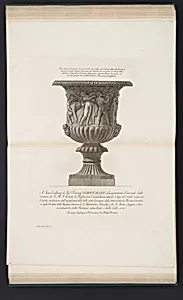
Step into the opulent world of ancient Rome through Giovanni Battista Piranesi's masterful etching, *Vase decorated with a Bacalian frieze*, from his 1778–80 publication *asi, candelabri, cippi, sarcof, tripodi, luc, ed ornamenti antichi This Venetian-born artist (1720–1778), a virtuoso of 18th-centurymaking, devoted his life to celebrating Roman antiquities. In this volume, Piranesi meticulously documented—and sometimes imaginatively reconstructed—vases, candelabra, and sarcophagi, blending archaeological precision with dramatic flair to inspire the Neoclassical revival sweeping Europe.
The composition centers on a grand vase adorned with a lively Bacchanalian frieze, depicting revelers honoring Bacchus, the god of wine and ecstasy. Etched on a large horizontal plate (20 11/16 x 15 3/16 inches), Piranesi's technique shines: intricate cross-hatching creates shadowy depths and textured surfaces, evoking the vase's marble heft and the frieze's chaotic energy. His Baroque-influenced style, with exaggerated scale and atmospheric perspective, transforms static artifacts into visions of imperial grandeur.
Housed in the Metropolitan Museum of Art's Drawings and Prints department, this print exemplifies Piranesi's cultural legacy—bridging antiquity and the Enlightenment, fueling architects like Robert Adam and collectors alike. It's a window to Rome's mythic past, reminding us how one artist's obsession immortalized forgotten treasures.