
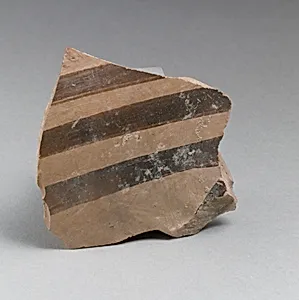
Vase fragment
Unknown Artist
ca. 1400–1300 BCE
Medium
Terracotta
Dimensions
3 1/16 × 2 3/4 × 7/16 in. (7.8 × 6.9 × 1.1 cm)
Classification
Vases
Culture & Period
Mycenaean · Late Helladic IIIA
Department
Greek and Roman Art
Museum
Metropolitan Museum of Art, New York, NY
Credit
Gift of Mrs. Wendell T. Bush, 1910
Accession Number
10.179.13
Rights
Public Domain
Art Historical Context
This delicate terracotta vase fragment hails from the Mycenaean of Late Bronze Age Greece, dating to 1400–1300 BCE during the Late Helladic III period. The Mycenaeans, famed for their grand citadels like those at Mycenae and Pylos, were a seafaring warrior society whose influence laid early foundations for classical Greek civilization. Though only a small piece survives—measuring just over three inches tall—this fragment offers a tangible glimpse into their daily life and artistry, likely part of a larger vessel used for storage, serving, or ritual purposes. Crafted from fired clay, Mycenaean terracotta vases like this one were typically wheel-thrown and decorated with vibrant slip paints in motifs inspired by the sea, nature, or geometry, reflecting the culture's maritime prowess and agricultural roots. The Late Helladic IIIA phase marked a peak in pottery innovation, with bolder, more dynamic designs emerging amid expanding trade networks across the Mediterranean. Such objects, produced in palace workshops, symbolized wealth and connectivity in a world of emerging palaces and Linear B script—the earliest form of Greek writing. Today, housed in the Metropolitan Museum of Art's Greek and Roman Art department, this fragment invites us to ponder the skilled hands behind Mycenaean craftsmanship and the fragile endurance of ancient stories preserved in clay.