
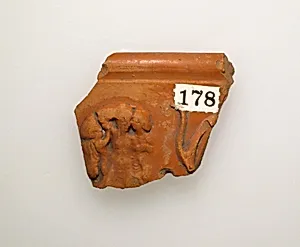
Vase fragment
Unknown Artist
Medium
Terracotta
Dimensions
1 3/4 × 2 × 5/16 in. (4.4 × 5.2 × 0.8 cm)
Classification
Vases
Culture
Roman, Gaul
Department
Greek and Roman Art
Museum
Metropolitan Museum of Art, New York, NY
Credit
Gift of J. Pierpont Morgan, 1917
Accession Number
17.194.2023
Rights
Public Domain
Tags
Art Historical Context
This delicate terracotta vase fragment, originating from Roman Gaul (modern-day France and surrounding regions), offers a glimpse into everyday life in the Roman provinces during the height of the Empire. Measuring just 1 3/4 × 2 × 5/16 inches, this small shard likely once belonged to a larger vessel used for storage, serving, or ritual purposes. Its classification among vases in the Metropolitan Museum of Art's Greek and Roman Art department highlights the ubiquity of terracotta pottery—fired clay that was affordable, durable, and widely produced across the Roman world. The fragment's tag associating it with "Children" suggests it may depict youthful figures, a common motif in Roman art symbolizing fertility, play, or domestic scenes. In Gaul, a frontier region blending local Celtic traditions with Roman influences, such provincial wares often featured molded or painted details reflecting cultural fusion. Terracotta techniques, involving wheel-throwing and low-fire kilns, allowed for intricate designs that brought artistry to utilitarian objects. Generously gifted to the Met in 1917 by financier J. Pierpont Morgan, this piece underscores the era's passion for classical antiquities. Though modest in scale, it invites us to imagine the hands that shaped it, connecting visitors to the vibrant, child-filled world of ancient Gaul.