
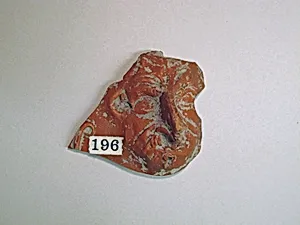
Vase fragment
Unknown Artist
Medium
Terracotta
Dimensions
2 1/8 × 2 1/2 × 1 1/16 in. (5.5 × 6.4 × 2.6 cm)
Classification
Vases
Culture
Roman, Gaul
Department
Greek and Roman Art
Museum
Metropolitan Museum of Art, New York, NY
Credit
Gift of J. Pierpont Morgan, 1917
Accession Number
17.194.2075
Rights
Public Domain
Tags
Art Historical Context
This delicate terracotta vase fragment, from Roman Gaul (modern-day France and surrounding regions), offers a glimpse into the everyday artistry of the Roman provinces around the 1st–3rd centuries CE. Measuring just over two inches across, it exemplifies the modest yet skillful pottery production in Gaul, where local workshops adapted Roman techniques to create functional vessels. The fragment's tag highlighting "faces" suggests it once bore sculpted or incised facial motifs—common in Roman art to evoke gods, ancestors, or theatrical masks—adding a personal or ritual touch to household items. Terracotta, fired clay valued for its durability and affordability, was the backbone of Roman tableware and storage. In Gaul, these vases bridged imperial styles with Celtic influences, showcasing wheel-thrown forms often decorated with reliefs or slips. Though small and incomplete, this piece reveals the cultural fusion of the empire: Roman standardization meeting regional flair. Generously donated by J. Pierpont Morgan in 1917, it resides in The Metropolitan Museum of Art's Greek and Roman Art Department. Such fragments remind us that grand history hides in humble shards, preserving stories of ancient lives.