
Vase Fragments, joined
Unknown Artist
1st century BCE–1st century CE
Medium
Terracotta
Dimensions
H. 3 15/16 in. (10 cm)
Classification
Vases
Culture
Roman
Department
Greek and Roman Art
Museum
Metropolitan Museum of Art, New York, NY
Credit
Gift of J. Pierpont Morgan, 1917
Accession Number
17.194.2053a, b
Rights
Public Domain
Tags
Art Historical Context
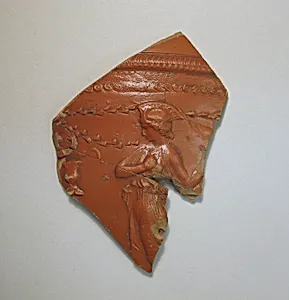
These delicate terracotta fragments from a Roman vase, dating to the 1st century BCE–1st century CE, offer a glimpse into everyday artistry during the late Roman Republic and early Empire. Standing just under 4 inches tall (10 cm), the pieces have been meticulously joined, revealing scenes of women dancers in motion. Terracotta, a fired clay medium, was widely used for utilitarian vases like this one, blending functionality with decorative flair through relief or painted motifs common in Roman households. The depiction of graceful female dancers evokes the lively world of Roman entertainment, possibly alluding to performances at festivals, symposia, or theatrical spectacles where women—professional dancers or celebrants—captivated audiences. Such imagery on vases highlights the cultural importance of dance in Roman society, blending artistry with social ritual. Though the artist remains unknown, the work exemplifies the technical skill of Roman potters in capturing dynamic human forms on small-scale objects. Now part of the Metropolitan Museum of Art's Greek and Roman Art collection, these fragments were generously gifted by J. Pierpont Morgan in 1917. They remind us how even broken artifacts can reconstruct stories of ancient joy and movement, inviting visitors to imagine the music and rhythm that once animated them.