
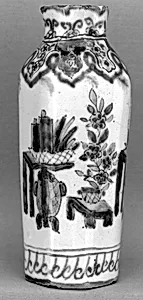
Vase (one of a pair)
second half 18th century
Medium
Tin-glazed earthenware
Dimensions
Height: 4 in. (10.2 cm)
Classification
Ceramics-Pottery
Culture
Dutch, Delft
Department
European Sculpture and Decorative Arts
Museum
Metropolitan Museum of Art, New York, NY
Credit
Gift of Henry G. Marquand, 1894
Accession Number
94.4.346
Rights
Public Domain
Tags
Art Historical Context
This charming pair of vases, crafted by Anthoni P at the De Twee ScheepjesThe Two Little Ships) in Delft, Netherlands, dates to the second half of the th century. Standing just 4 inches tall, these tin-glazed earthenware pieces the delicate scale and everyday elegance of Dutch delftware. Gifted to the Metropolitan Museum of Art 1894 by Henry G. Marquand, they reside in the European Sculpture andative Arts department. Delftware, a tin-glazed pottery tradition that flourished in Delft from the 17th century onward, allowed Dutch artisans to rival imported Chinese porcelain at a fraction of the cost. Factories like De Twee Scheepjes—named for its two-ship trademark—produced vibrant ceramics for homes across Europe, often featuring floral motifs that brought a touch of the garden indoors. The tin glaze created a smooth, white surface ideal for bold painted designs, with this pair likely adorned in the classic blue-and-white style, though colorful variations were common by the 18th century. These vases highlight delftware's cultural role as affordable luxury, bridging art and utility in prosperous Dutch households. Their petite size suggests use on mantels or tables, evoking the refined domestic life of the Enlightenment era. A delightful glimpse into 18th-century craftsmanship!