
Vase: Qingbai Shufu-type ware (pair with 1975.1.1669)
14th century
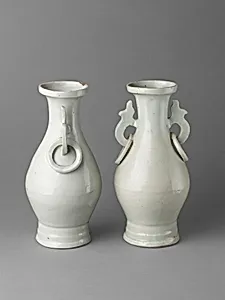
Medium
Porcelain with bluish-toned glaze.
Dimensions
Height: 26 cm.
Classification
Ceramics
Culture
Chinese
Department
Robert Lehman Collection
Museum
Metropolitan Museum of Art, New York, NY
Credit
Robert Lehman Collection, 1975
Accession Number
1975.1.1670
Rights
Public Domain
Art Historical Context
This elegant Qingbai Shufu-type vase, standing 26 cm tall, exemplifies the pinnacle of 14th-century Chinese porcelain from the Yuan dynasty (1279–1368). Crafted with a delicate porcelain body and covered in a signature bluish-toned glaze, it a soft, translucent glow that mimics jade—China's most revered stone. The subtle blue hue, derived from iron impurities in the glaze fired at high temperatures in Jingdezhen kilns, Shufu ware as a refined evolution of earlier Qingbai porcelains, often reserved for imperial or elite use. Shufu pieces, named after the "Shufu" (Privy Council) inscriptions found on some examples, represent imperial innovation during a cosmopolitan era influenced by Mongol rule. These vases, part of a matched pair (with 1975.1.1669), highlight technical mastery: thin walls, flawless molding, and a glaze that pools richly at the base, creating dynamic light effects. Their form—likely a baluster shape—served both aesthetic and practical purposes in scholarly or ceremonial settings. Housed in the Robert Lehman Collection at The Metropolitan Museum of Art since 1975, this vase invites visitors to appreciate China's enduring ceramic legacy, bridging Song subtlety with Ming grandeur. A testament to cross-cultural exchange along the Silk Road, it whispers of an age when porcelain was "white gold."
About the Artist
Chinese
The artist known simply as "Chinese" in museum records represents the vast tradition of anonymous or unattributed masters in Chinese art history, with 99 works preserved in our collection. These pieces exemplify the enduring legacy of guó huà, or traditional Chinese painting, one of the world's oldest continuous artistic practices. Early life is not well documented, as is common for many practitio...