
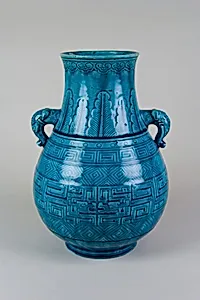
Vase with archaistic design
Unknown Artist
late 18th century
Medium
Porcelain with low relief decoration under turqoise glaze (Jingdezhen ware)
Dimensions
H. 12 5/8 in. (32.1 cm)
Classification
Ceramics
Culture & Period
China · Qing dynasty (1644–1911)
Department
Asian Art
Museum
Metropolitan Museum of Art, New York, NY
Credit
Purchase by subscription, 1879
Accession Number
79.2.885
Rights
Public Domain
Art Historical Context
This elegant vase from China's Qing dynasty (1644–1), crafted in the late 18th century, exemplifies pinnacle of porcelain artistry at Jingdezhen, the world's premier center for imperial ceramics. Standing at 12⅝ inches tall, it a striking turquoise glaze that envelops low-relief decorations, a technique where motifs are subtly carved or molded before glazing. This creates a tactile depth that catches the light, enhancing the vase's luminous quality. The "archa design" nods to ancient Chinese bronzes and jades from earlier dynasties like the Zhou or Han, reflecting the Qing emperors' fascination with antiquity. During this period, artisans revived archaic patterns—such as taotie masks or cloud scrolls—to evoke timeless elegance and imperial prestige. Produced under likely court patronage, these vases served as display pieces in elite homes or palaces, symbolizing cultural continuity and refinement. Acquired by subscription in 1879 for the Metropolitan Museum of Art, this Jingdezhen treasure highlights the global allure of Qing porcelain, blending technical mastery with historical reverence. Visitors will appreciate its serene turquoise hue and intricate reliefs, a window into China's enduring ceramic legacy.