
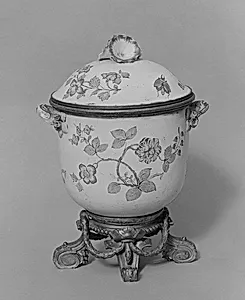
Vase with cover
ca. 1740–45
Medium
Tin-glazed soft-paste porcelain; gilt bronze
Dimensions
Height: 8 1/4 in. (21 cm)
Classification
Ceramics-Porcelain
Culture
French, Chantilly
Department
European Sculpture and Decorative Arts
Museum
Metropolitan Museum of Art, New York, NY
Credit
Bequest of Edward C. Post, 1915
Accession Number
30.58.26a, b
Rights
Public Domain
Tags
Art Historical Context
This elegant vase with cover, created at the Chantilly porcelain factory around 1740–45, exemplifies the refined luxury of French decorative arts during the early Rococo period. Produced in tin-glazed soft-paste porcelain with gilt-bronze mounts, the piece stands just over eight inches tall and reflects the era’s fascination with delicate, nature-inspired ornament. The Chantilly manufactory, established in 1730 under the patronage of the Prince of Condé, was among the first in France to successfully produce soft-paste porcelain, offering an affordable yet sophisticated alternative to costly imported Chinese and Japanese wares. The vase’s surface, adorned with colorful flowers and insects, showcases the factory’s signature style of lively, naturalistic painting. These motifs drew inspiration from both European botanical studies and Asian ceramic traditions, creating an appealing blend that appealed to aristocratic collectors. The addition of gilt-bronze mounts further elevated the object, transforming it into a precious cabinet piece suitable for display in fashionable 18th-century interiors. As a product of Chantilly’s innovative workshop, this vase highlights the technical achievements and artistic tastes of pre-Revolutionary France, where porcelain became a symbol of elegance and cultural refinement. Today it resides in the Metropolitan Museum’s collection of European Sculpture and Decorative Arts, offering visitors a glimpse into the period’s exquisite craftsmanship.