
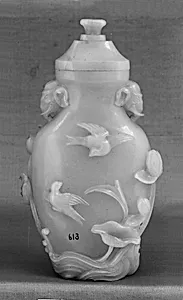
Vase with cover
Unknown Artist
Medium
Nephrite, white with light greenish tint
Dimensions
H. 6 5/16 in. (16.1 cm); W. 3 9/16 in. (9 cm); D. 1 5/8 in. (4.1 cm)
Classification
Jade
Culture & Period
China · Qing dynasty (1644–1911), Qianlong period (1736–95)
Department
Asian Art
Museum
Metropolitan Museum of Art, New York, NY
Credit
Gift of Heber R. Bishop, 1902
Accession Number
02.18.613a, b
Rights
Public Domain
Tags
Art Historical Context
This exquisite *Vase with Cover* exemplifies the masterful jade craftsmanship of China's Qing dynasty during the Qianlong period (6–95), a age for imperial arts. Carved from nephrite—a prized form of jade prized for its toughness and luminous quality—this small vessel (just over 6 inches tall) features a white body with a subtle light greenish, evoking the misty purity associated with immortality and virtue in Chinese culture. Nephrite's fine grain allowed artisans to achieve intricate detailing, making it ideal for both functional objects and symbols of prestige. Qianlong emperor's workshops elevated jade carving to new heights, producing luxurious items for the palace that blended utility with opulence. The vase's bird motifs, likely delicately incised or low-relief carved, reflect auspicious themes in Chinese iconography—birds often symbolize joy, longevity, or scholarly pursuits. Such pieces were status symbols, gifted among elites or displayed in scholarly studios. A generous gift to the Metropolitan Museum of Art from Heber R. Bishop in 1902, this vase invites visitors to appreciate the tactile elegance of imperial jade, where every curve whispers of centuries-old reverence for nature's finest stone.