
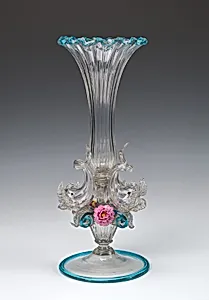
Vase with Dolphins and Flowers
ca. 1880s-1890s
Medium
Decorative Arts-Glass
Classification
Decorative Arts-Glass
Department
Smithsonian Collection
Museum
Smithsonian American Art Museum
Credit
Smithsonian American Art Museum, Gift of John Gellatly
Accession Number
1929.8.469.1
Rights
Public Domain
Tags
About this artwork
This tall vase showcases many glassmaking techniques and decorative features admired by American tourists in the late nineteenth century. Its trumpetlike form suggests the action of glassblowing, with the artist's breath extending molten material into an elegant, fluted cone. A trio of dolphins and chrysanthemums rings the stem, each meticulously constructed, attached, and shaped over an open flame. Flowers and sea creatures were favorite decorative elements in Venetian glassware of the seventee...
Art Historical Context
Step into the shimmering world of Venetian glass with *Vase with Dolphins and*, crafted by the Compagnia di Venezia eano (CVM) around the 1880s-1890s. This piece from the Smithsonian American Art Museum's decorative arts collection captures the revival of Murano's legendary glassmaking traditions during a time when Venice's artisans catered to international tastes, including American tourists seeking luxurious souvenirs. The vase's trumpetlike form elegantly evokes the glassblower's skill: molten glass extended by breath into a fluted cone, then adorned with a trio of meticulously crafted dolphins and chrysanthemums ringing the stem. Each element was attached and shaped over an open flame, showcasing advanced techniques like trailing, sculpting, and layering—hallmarks of Venetian glass that blend functionality with fantasy. These motifs of flowers and sea creatures hark back to the seventeenth century, when Venice, the "Queen of the Adriatic," dominated trade and naval power, infusing its glassware with maritime pride. Gifted to the museum by John Gellatly, this vase highlights the cultural allure of Italian decorative arts in late nineteenth-century America, where such opulent objects symbolized sophistication and wanderlust. A true testament to craftsmanship, it invites you to admire the delicate interplay of light and form.