
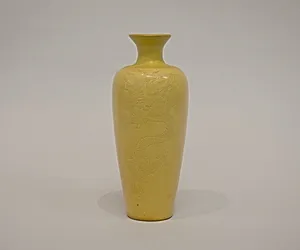
Vase with dragon
Unknown Artist
late 17th–early 18th century
Medium
Porcelain with incised decoration under yellow glaze (Jingdezhen ware)
Dimensions
H. 9 15/16 in. (25.2 cm); Diam. 3 3/4 in. (9.5 cm)
Classification
Ceramics
Culture & Period
China · Qing dynasty (1644–1911), Kangxi period (1662–1722)
Department
Asian Art
Museum
Metropolitan Museum of Art, New York, NY
Credit
Bequest of Benjamin Altman, 1913
Accession Number
14.40.167
Rights
Public Domain
Tags
Art Historical Context
This delicate porcelain vase, titled *Vase with Dragon*, exemplifies the pinnacle of Qing dynasty craftsmanship from China's renowned Jingdezhen kilns the Kangxi period (2–1722). just under 10 inches tall with a slender 3¾-inch diameter, it features subtle yet striking incised dragon motif beneath a rich yellow glaze. Produced in the late 17th to early 18th century, wares were exported globally, showcasing China's dominance in ceramics during a golden age of imperial patronage. The incising technique—carving intricate designs directly into the soft clay before applying glaze—creates a textured effect that shimmers through the translucent yellow layer, adding depth and sophistication. Yellow glazes held special prestige, often linked to imperial workshops, evoking the emperor's symbolic color and the dragon's auspicious power over rain, rivers, and prosperity in Chinese cosmology. As a bequest to the Metropolitan Museum of Art from Benjamin Altman in 1913, this vase highlights the Kangxi era's technical innovation and cultural symbolism, where dragons embodied divine authority and good fortune, making it a captivating window into Qing artistry for visitors today.