
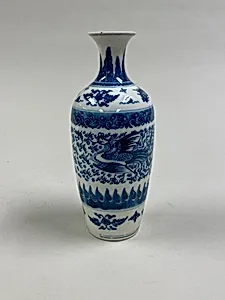
Vase with dragon and phoenix
Unknown Artist
early 18th century
Medium
Soft-paste porcelain with underglaze cobalt blue (Jingdezhen ware)
Dimensions
H. 7 5/8 in. (19.4 cm); Diam. 3 1/4 in. (8.3 cm)
Classification
Ceramics
Culture & Period
China · Qing dynasty (1644–1911)
Department
Asian Art
Museum
Metropolitan Museum of Art, New York, NY
Credit
Bequest of Benjamin Altman, 1913
Accession Number
14.40.271
Rights
Public Domain
Tags
Art Historical Context
This delicate vase, titled *Vase with Dragon Phoenix*, hails from China's renowned Jingdezhen kilns during the early 18th century, in the Qing dynasty (1644–1). Crafted from soft-paste porcelain—a refined material blending kaolin clay with glass frit for a luminous glow—and painted in vibrant underglaze cobalt blue it stands just 7⅝ inches tall with a 3¼-inch. This petite baluster form was ideal for scholarly displays or altars, showcasing the imperial kilns' mastery at a time when porcelain production reached artistic heights under Emperor Kangxi and Yongzheng. The dynamic motifs of a coiling dragon and soaring phoenix hold profound cultural symbolism. In Chinese lore, the dragon embodies imperial power, rain, and yang energy, while the phoenix represents the empress, virtue, and yin harmony. Together, they evoke marital bliss, prosperity, and cosmic balance—auspicious themes for Qing elite patrons. The underglaze technique, where cobalt pigment is applied before glazing and fired at high temperatures, ensured the bold blues endured vividly, a hallmark of Jingdezhen's blue-and-white wares that captivated global trade. Now in the Metropolitan Museum of Art's Asian Art collection, thanks to the 1913 bequest of Benjamin Altman, this vase exemplifies Qing porcelain's elegance and enduring allure, bridging artistry and symbolism for visitors today.