
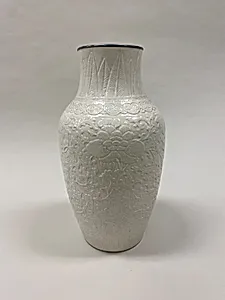
Vase with floral scrolls
Unknown Artist
18th century
Medium
Soft paste porcelain with relief decoration (Jingdezhen ware)
Dimensions
H. 13 1/4 in. (33.7 cm); Diam. 7 in. (17.8 cm)
Classification
Ceramics
Culture & Period
China · Qing dynasty (1644–1911)
Department
Asian Art
Museum
Metropolitan Museum of Art, New York, NY
Credit
Bequest of Benjamin Altman, 1913
Accession Number
14.40.147
Rights
Public Domain
Art Historical Context
This elegant vase, titledVase with Floral Scrolls hails from China's Qing dynasty (1644–1), specifically the 18th century, a golden age for porcelain artistry. at Jingdezhen, the imperial kil renowned worldwide as the porcelain, it exemplifies the technical of Chinese ceramicists. at 13¼ inches with a 7-inch, its graceful baluster shape made it ideal for display in scholarly studios or elite homes, showcasing floral scroll motifs evoke the lush harmony of. Crafted from soft-paste porcelain—a finer, more translucent clay body than standard hard-paste—this piece features intricate relief decoration, where motifs are molded in raised layers for a tactile, three-dimensional effect. This technique highlighted the potters' skill in capturing delicate scrolling vines and blooms, blending functionality with opulent beauty. Jingdezhen wares like this were exported globally, influencing European ceramics and symbolizing China's cultural prestige. Now in the Metropolitan Museum of Art's Asian Art Department, thanks to the 1913 bequest of collector Benjamin Altman, the vase invites us to appreciate Qing innovation. Its anonymous creator embodies the collaborative genius of imperial workshops, where artistry served both aesthetics and imperial taste.