
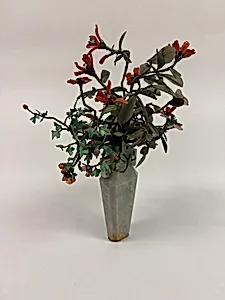
Vase with Flowers
Unknown Artist
Medium
Jadeite, the vases white with mottlings of emerald-green and a very faint lavender tint
Dimensions
H. 14 3/8 in. (36.5 cm); W. 9 in. (22.9 cm)
Classification
Jade
Culture & Period
China · Qing dynasty (1644–1911), Jiaqing period (1796–1820)
Department
Asian Art
Museum
Metropolitan Museum of Art, New York, NY
Credit
Gift of Heber R. Bishop, 1902
Accession Number
02.18.748
Rights
Public Domain
Tags
Art Historical Context
This exquisite jadeite vase, titled *Vase with Flowers*, hails from China's Qing dynasty during the Jiaqing period (1796–1820). Standing at 14⅜ inches tall and 9 inches wide, it showcases the prized mineral's natural beauty: a luminous white body mottled with emerald-green veins and subtle lavender tints. Carved to depict blooming flowers and leaves, the vase exemplifies the masterful lapidary techniques of imperial workshops, where artisans transformed raw jade into functional yet ornamental objects. In Chinese culture, jade held profound symbolic value as an emblem of purity, immortality, and imperial virtue, often reserved for the elite. During the Qing era, jade carving reached new heights of refinement, with Jiaqing pieces reflecting the dynasty's opulent aesthetic. The vase's organic mottling was ingeniously integrated into the floral motifs, enhancing their lifelike vibrancy without added pigmentation—a testament to the artist's skill in harmonizing nature's palette. A generous gift from collector Heber R. Bishop in 1902, this treasure now graces the Metropolitan Museum of Art's Asian Art collection, inviting visitors to appreciate the timeless allure of Chinese jade craftsmanship.