
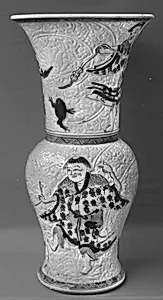
清康熙 景德鎮窯浮雕青花釉裏紅劉海戯金蟾鳳尾瓶|Vase with immortal Liu Hai
Unknown Artist
18th century
Medium
Porcelain with relief decoration, painted in underglaze cobalt blue and copper red (Jingdezhen ware)
Dimensions
H. 17 3/8 in. (44.1 cm); Diam. 7 1/8 in. (18.1 cm); Diam. of rim 8 5/8 in. (21.9 cm); Diam. of base 6 in. (15.2 cm)
Classification
Ceramics
Culture & Period
China · Qing dynasty (1644–1911)
Department
Asian Art
Museum
Metropolitan Museum of Art, New York, NY
Credit
Purchase by subscription, 1879
Accession Number
79.2.397
Rights
Public Domain
Tags
Art Historical Context
This exquisite porcelain vase, crafted during the Kangxi reign (1662–1722) of the Qing at the renowned Jingdezhen kilns, exemplifies the pinnacle of imperial Chinese ceramics. Shaped as a phoenix-tail—standing 17⅜ inches tall with a flared rim and slender base—it features intricate relief carvings of the Daoist immortal Liu Hai interacting with his three-legged golden, a symbol of wealth and good fortune. Vibrant underglaze cobalt blue (hua) patterns contrast with rich copper-red enamels fired beneath the glaze (liuhong), creating a dynamic interplay of color and texture against a creamy white body. Jingdezhen, China's porcelain capital, produced such masterpieces for the imperial court, showcasing advanced techniques like relief molding for three-dimensional figures and precise control of copper-red firing, which was notoriously difficult to achieve without blemishes. This 18th-century innovation blended Ming dynasty blue-and-white traditions with bold polychrome effects, marking Kangxi porcelain as a high point of artistic refinement. Liu Hai's whimsical depiction reflects Daoist folklore and auspicious themes popular in Qing decorative arts, inviting prosperity into the home. Acquired by subscription in 1879, this vase at the Metropolitan Museum of Art offers a window into the opulence of Kangxi-era China, where ceramics were both functional luxury and cultural treasure.