
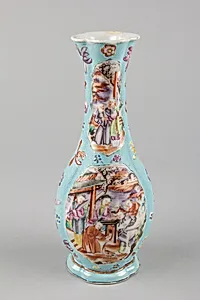
Vase with ladies and boys
Unknown Artist
late 18th–19th century
Medium
Porcelain painted in overglaze polychrome enamels (Jingdezhen ware with Canton enamels)
Dimensions
H. 9 3/8 in. (23.8 cm)
Classification
Ceramics
Culture & Period
China · Qing dynasty (1644–1911)
Department
Asian Art
Museum
Metropolitan Museum of Art, New York, NY
Credit
Bequest of Mary Stillman Harkness, 1950
Accession Number
50.145.245
Rights
Public Domain
Tags
Art Historical Context
This elegant porcelain vase, titled *Vase with Ladies and Boys*, hails from China's Qing dynasty (1644–1911), produced in the late 18th early 19th century Standing at 9⅜ (23.8 cm) tall, it features delicate overglaze polychromeels depicting graceful women and playful boys—scenes that evoke domestic harmony or familial joy, common motifs in Qing ceramics. Crafted in the famed Jingdezhen kilns, the epicenter of imperial porcelain production, this piece showcases the era's technical mastery in producing translucent white bodies fired to perfection. The medium is particularly noteworthy: Jingdezhen porcelain provided the flawless base, while vibrant Canton enamels—applied in Guangzhou and fired at lower temperatures—allowed for intricate, colorful overglaze painting that wouldn't crack the delicate surface. These enamels, often used for export wares, brought European-influenced hues and motifs to Chinese artistry, blending local traditions with global trade demands during the Qing's prosperous yet turbulent final centuries. Now in the Metropolitan Museum of Art's Asian Art Department, thanks to the 1950 bequest of Mary Stillman Harkness, this vase offers a window into Qing opulence and everyday elegance, reminding us of porcelain's role as China's "white gold" in cultural exchange.