
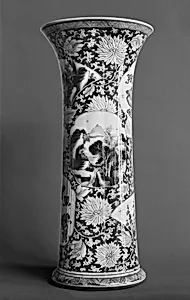
清康熙 景德鎮窯青花開光山水花鳥瓶|Vase with landscape and bird-and-flower scenes
Unknown Artist
Medium
Porcelain painted with cobalt blue under a transparent glaze (Jingdezhen ware, Jiangxi)
Dimensions
H. 20 5/8 in. (52.4 cm)
Classification
Ceramics
Culture & Period
China · Qing dynasty (1644–1911), Kangxi period (1662–1722)
Department
Asian Art
Museum
Metropolitan Museum of Art, New York, NY
Credit
Bequest of Benjamin Altman, 1913
Accession Number
14.40.291
Rights
Public Domain
Art Historical Context
This elegant vase, crafted during the Kangxi period1662–1722) of China's Qing dynasty, exemplifies the pinnacle of Jingdezhen production—the imperial kilns in Jiangxi province renowned worldwide for their technical mastery. Standing at ⅝ inches tall, it is a baluster-form vessel painted in cobalt blue under a clear, a technique that allows vibrant blues to shine through while protecting the delicate designs. Produced around the late 17th century, such wares were symbols of refined taste, often adorning scholarly studios or elite homes. The vase's surface features "kaiguang" reserves—framed panels showcasing serene landscapes and delicate bird-and-flower motifs, a harmonious blend of nature's beauty that reflects traditional Chinese aesthetics. These scenes evoke poetic ideals of harmony between humanity and the natural world, with birds symbolizing freedom and flowers representing seasonal renewal. The underglaze cobalt, sourced from imported ores, ensured colorfastness, making these pieces prized exports to Europe and beyond. Bequeathed to the Metropolitan Museum of Art in 1913 by Benjamin Altman, this anonymous masterpiece highlights the Kangxi era's artistic renaissance, when porcelain innovation rivaled painting and calligraphy. A testament to enduring craftsmanship, it invites visitors to appreciate the subtle poetry etched in clay.