
Vault Key
Unknown Artist
14th century
Medium
Stone
Dimensions
Overall: 12 x 19 in. (30.5 x 48.3 cm)
Classification
Sculpture-Architectural-Stone
Culture
French
Department
The Cloisters
Museum
Metropolitan Museum of Art, New York, NY
Credit
The Cloisters Collection, 1925
Accession Number
25.120.305
Rights
Public Domain
Tags
Art Historical Context
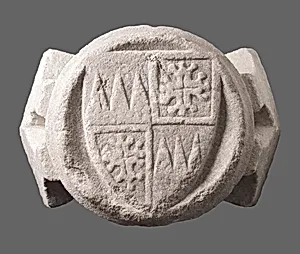
Nestled in The Cloisters' collection at the Metropolitan Museum of Art *Vault Key* is a 14th-century French sculpture measuring 12 x 19 inches. Carved from stone, this architectural element served as a keystone—the crucial wedge-shaped stone at the apex of a vaulted arch or ceiling that locked surrounding stones in place, ensuring structural integrity in grand medieval buildings. Crafted during the height of Gothic architecture in France, the piece exemplifies the era's innovative engineering and ornate decoration. Gothic vaults, with their ribbed designs, allowed for soaring heights and expansive interiors in cathedrals and abbeys, filling spaces with light through stained glass. This keystone, adorned with a coat of arms and symbolic keys, likely crowned a vault in a church or noble residence, proclaiming patronage or ecclesiastical authority—the keys evoking St. Peter and the power to bind or loose in Christian tradition. Its survival offers a tangible link to medieval craftsmanship, where sculptors blended utility with symbolism. Acquired in 1925 as part of The Cloisters Collection, *Vault Key* invites visitors to ponder the builders' ingenuity and the heraldry that wove personal identity into sacred spaces.