
Veil
Unknown Artist
late 18th century
Medium
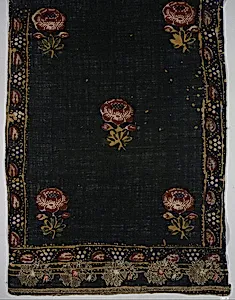
Gauze; printed, end borders embroidered in gold thread
Dimensions
H. 27 1/2 in. (69.9 cm) W. 18 in. (45.7 cm)
Classification
Textiles-Costumes
Department
Islamic Art
Museum
Metropolitan Museum of Art, New York, NY
Credit
Edward C. Moore Collection, Bequest of Edward C. Moore, 1891
Accession Number
91.1.39
Rights
Public Domain
Tags
Art Historical Context
Step into the elegant world of 18th-century Islamic textiles *Veil*, a delicate garment from the late 0s now housed in the Metropolitan Museum of Art's Islamic Art Department. Crafted from lightweight gauze—a sheer, breathable fabric ideal veils—this piece measures 27½ by 18 inches, perfect for draping over the face or head. Its surface features printed floral motifs, evoking the lush gardens celebrated in Islamic art, while the end borders are richly embroidered with shimmering gold thread, adding a touch of opulence. In Islamic culture, veils like this were essential elements of women's attire, blending modesty with beauty and often signifying social status through luxurious materials. The combination of printing—a technique allowing intricate, repeatable patterns on fine gauze—and meticulous gold embroidery highlights the era's masterful textile craftsmanship, likely produced in regions like the Ottoman Empire or Persia where such skills flourished. Part of the Edward C. Moore Collection bequeathed in 1891, this anonymous artwork offers a glimpse into everyday elegance and artistic ingenuity, reminding us how flowers and gold transformed a simple veil into a wearable treasure.