
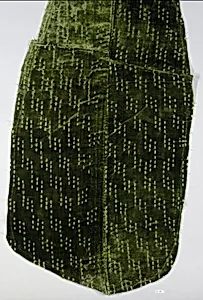
Velvet fragments with slashed pattern
Unknown Artist
16th–17th century
Medium
Silk
Dimensions
L. 30 x W. 14 3/8 inches (76.2 x 36.5 cm)
Classification
Textiles-Velvets
Culture
Italian
Department
European Sculpture and Decorative Arts
Museum
Metropolitan Museum of Art, New York, NY
Credit
Gift of Kate Read Blacque, in memory of her husband, Valentine Alexander Blacque, 1933
Accession Number
33.95.7
Rights
Public Domain
Art Historical Context
These exquisite velvet fragments, crafted in Italy during the 16th–17th centuries, showcase the pinnacle of Renaissance textile artistry. Woven from luxurious silk, the pieces measure 30 x 14⅜ inches (76.2 x 36.5 cm) and feature a distinctive slashed pattern—a technique where the velvet pile is precisely cut to reveal contrasting layers beneath, creating a dynamic interplay of color and texture. Produced by an unknown artisan, these remnants likely originated from opulent garments, furnishings, or ecclesiastical vestments, hallmarks of Italy's renowned weaving centers like Genoa and Venice. The slashed style emerged in the late Renaissance as a bold fashion statement, mimicking the military armor slashes of earlier eras while symbolizing wealth and sophistication among Europe's elite. Italian silk velvets were highly prized exports, their intricate pile weaves demanding masterful loom work and dyestuffs imported from afar. This fragment's survival offers a tactile glimpse into daily opulence, where textiles rivaled paintings in artistic prestige. Generously gifted to the Metropolitan Museum of Art in 1933 by Kate Read Blacque in memory of her husband, Valentine Alexander Blacque, these fragments invite visitors to appreciate the enduring allure of decorative arts—where silk's shimmer still whispers tales of grandeur.