
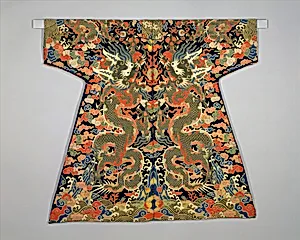
清早期 彩絨龍袍料|Velvet Textile for a Dragon Robe
Unknown Artist
17th century
Medium
Silk velvet with weft patterning in silk, metallic thread, and feather thread
Dimensions
55 in. × 8 ft. 6 in. (139.7 × 259.1 cm)
Classification
Costumes-Velvets
Culture & Period
China · Qing dynasty (1644–1911)
Department
Asian Art
Museum
Metropolitan Museum of Art, New York, NY
Credit
Purchase, Friends of Asian Art Gifts, 1987
Accession Number
1987.147
Rights
Public Domain
Tags
Art Historical Context
This exquisite velvet textile, designed for a dragon robe from early Qing dynasty China (17th century), the opulent craftsmanship reserved for imperial garments. Measuring an impressive 55 inches by 8 feet 6 inches, this long panel would have formed part of a full-length robe, its surface alive with dynamic dragon motifs symbolizing the emperor's supreme power and divine authority. Produced during the Manchu Qing era (1644–1911), such robes marked a shift from Ming dynasty styles, incorporating bolder, more symmetrical designs to reflect the new rulers' cosmology. The medium—silk velvet with intricate weft patterning in silk, metallic threads, and rare feather threads—highlights advanced textile techniques. Velvet's piled surface creates a rich, shimmering depth, while weft patterning weaves colorful motifs directly into the fabric. The inclusion of feather threads, sourced from birds for their natural luster, adds an iridescent, almost otherworldly sheen, evoking the dragons' mythical vitality. This labor-intensive process, likely executed in imperial workshops, underscores the fusion of artistry and symbolism. In Chinese culture, dragon robes were exclusive to the emperor and highest officials, embodying harmony between heaven and earth. Now at the Metropolitan Museum of Art (acquired in 1987), this fragment offers a tantalizing glimpse into Qing splendor, inviting us to imagine it draped on the Son of Heaven.