
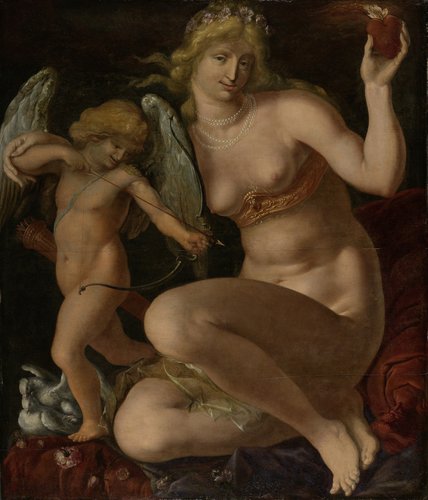
Venus and Amor
1605 - 1610
Medium
oil on panel
Dimensions
132; 112
Rights
Public Domain
About this artwork
oil on panel
Art Historical Context
Jacques de Gheyn II painted *Venus and Amor* between 1605 and 1610 in the Dutch Republic during the early years of the Golden Age. The large oil-on-panel work, measuring over a meter in height, depicts the goddess of love alongside her son Cupid. Oil on panel was a favored medium in Northern Europe at the time, prized for its ability to capture luminous skin tones, rich fabrics, and delicate details that would endure for centuries. This mythological subject carried special resonance in the young Dutch Republic, where classical themes of beauty, desire, and affection appeared alongside the era’s celebrated still lifes and portraits. De Gheyn, who began his career as a highly skilled engraver before turning to painting, brought a precise, almost graphic sensibility to his canvases. The substantial scale of the panel suggests it was likely created for a prosperous private collector or civic setting, reflecting the growing cultural confidence of the period. Today housed in the Rijksmuseum, the painting invites viewers to consider how Dutch artists adapted international artistic traditions to their own world. The warm glow of the oil medium and the intimate scale of the figures continue to draw modern audiences into this timeless exploration of love and maternal affection.