
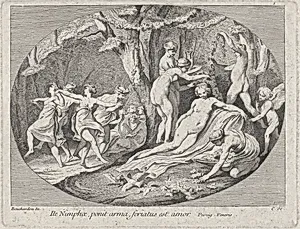
Venus with nymphs
Medium
Etching; second state of two
Dimensions
Sheet: 9 5/16 × 11 3/4 in. (23.7 × 29.8 cm) Plate: 6 3/8 × 8 3/8 in. (16.2 × 21.3 cm)
Classification
Prints
Department
Drawings and Prints
Museum
Metropolitan Museum of Art, New York, NY
Credit
Harris Brisbane Dick Fund, 1953
Accession Number
50.514.2
Rights
Public Domain
Tags
Art Historical Context
### Venus with NymphsThis enchanting etching, *Venus with Nymphs*, captures the graceful allure of classical mythology in the Rococo style of mid-18th-century France Created around 1730–60, it is a collaborative work by the Comte de Caylus, a passionate antiquarian and engraver, and Edmeardon, a leading sculptor known for his elegant neoclassical figures. The second state of two impressions, measuring about 9 x 11 inches on the sheet, showcases refined etching techniques that allowed for intricate details in the flowing drapery and serene expressions of Venus and her attendant nymphs. Etching, a printmaking method where acid bites into a metal plate to create lines, was ideal for reproducing Bouchardon's fluid designs, making such mythological scenes accessible beyond original sculptures or paintings. During Louis XV's reign, Venus—goddess of love and beauty—symbolized the era's fascination with pleasure, nature, and antiquity, blending pagan grace with French refinement. Acquired through the Harris Brisbane Dick Fund in 1953, this print from the Metropolitan Museum of Art's Drawings and Prints department highlights the collaborative spirit of Enlightenment-era artists. It invites visitors to ponder how prints democratized art, bringing the timeless charm of Venus's world into elegant salons and scholarly collections. (198 words)