
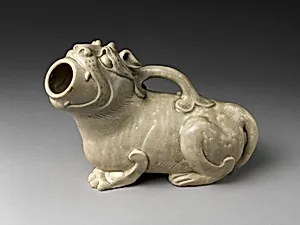
西晉 青瓷虎子|Vessel in shape of a crouching tiger
Unknown Artist
3rd–5th century
Medium
Stoneware with celadon glaze
Dimensions
H. 8 3/8 in (21.3 cm); W. 5 7/8 in. (14.9 cm); L.11 7/8 in. (30.2 cm)
Classification
Ceramics
Culture & Period
China · Western Jin dynasty (265–316)
Department
Asian Art
Museum
Metropolitan Museum of Art, New York, NY
Credit
Harris Brisbane Dick Fund, 1960
Accession Number
60.75.2
Rights
Public Domain
Tags
Art Historical Context
This striking stoneware vessel, crafted in the shape of a crouching tiger during China’s Western Jin dynasty (265–316), exemplifies the inventive spirit of early Chinese ceramics. Measuring just over a foot in length, the piece was formed from durable stoneware and coated with a subtle celadon glaze that yields a soft, jade-like green tone. Such tiger-shaped ewers, known as *huzi*, were likely used for pouring liquids in ritual or daily settings, blending utility with powerful animal imagery. The Western Jin period marked an important transition in Chinese art, as potters refined high-fired stoneware techniques and experimented with celadon glazes that would influence later porcelain traditions. The naturalistic rendering of the tiger—its muscular body, alert ears, and alert posture—reveals a keen observation of the natural world, while the glossy glaze enhances the creature’s lifelike presence. Today housed in the Metropolitan Museum of Art, this vessel offers visitors a tangible connection to third- and fourth-century Chinese culture, where animals often symbolized strength and protection in both funerary and household objects.