
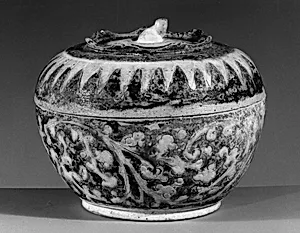
Vessel in the Shape of a Persimmon
Unknown Artist
ca. 15th century
Medium
Earthenware
Dimensions
H. 3 15/16 in. (10 cm); Diam. 5 1/16 in. (12.9 cm)
Classification
Ceramics
Culture
Thailand
Department
Asian Art
Museum
Metropolitan Museum of Art, New York, NY
Credit
Rogers Fund, 1965
Accession Number
65.60.2a, b
Rights
Public Domain
Art Historical Context
This charming earthenware vessel, shaped like a ripe persimmon, hails from 15th-century Thailand and exemplifies the inventive ceramics of the Ayutaya Kingdom period (c. 1351–1767). Standing just under 4 inches tall and 5 inches wide, its compact, naturalistic form mimics the fruit's glossy, rounded silhouette, complete with a subtle stem-like handle. Crafted from low-fired clay, the piece showcases the technical skill of anonymous Thai potters, who often drew inspiration from everyday nature to create functional yet whimsical objects. In Thai ceramic traditions, earthenware like this was produced in kilns across central Thailand, valued for its earthy warmth and durability. Vessels in fruit or vegetable forms were not uncommon, blending utility—perhaps for holding spices, oils, or cosmetics—with decorative appeal, reflecting a cultural appreciation for abundance and harmony with nature. The persimmon shape may evoke prosperity, as the fruit symbolizes good fortune in Southeast Asian lore. Acquired through the Rogers Fund in 1965, this vessel now graces the Metropolitan Museum of Art's Asian Art collection, offering visitors a tangible glimpse into Thailand's vibrant ceramic heritage. Its simple elegance invites us to ponder the daily lives of artisans who transformed humble clay into artful treasures.