
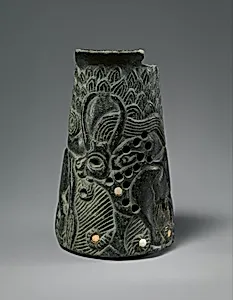
Vessel with two zebu
Unknown Artist
2600–2350 BCE
Medium
Chlorite, calcite inlay
Dimensions
4 1/2 × 2 3/4 × 2 3/4 in. (11.4 × 7 × 7 cm)
Classification
Stone-Vessels
Period
Early Dynastic II-III
Department
Ancient Near Eastern Art
Museum
Metropolitan Museum of Art, New York, NY
Credit
Gift of Mrs. Constantine Sidamon-Eristoff, 2014
Accession Number
2014.717
Rights
Public Domain
Tags
Art Historical Context
Step into the world of ancient Mesopotamia with this exquisite *Vessel with Two Zebu*, crafted around2600–2350 during the Early Dynastic II-III period. Hailing from the Ancient Near East—likely Sumerian city-states like Ur or Lagash—this small stone vessel (just 4½ × 2¾ × 2¾ inches) exemplifies the era's elite craftsmanship. Produced by an unknown artist, it reflects a time when powerful temples and palaces commissioned luxury goods to showcase wealth and piety. Fashioned from chlorite, a soft, gray-green stone prized for its carvability, the vessel features intricate calcite inlays that highlight the humped silhouettes of two zebu cattle. These inlays create a striking contrast, emphasizing the animals' forms in a technique typical of Mesopotamian stone vessels. Such objects held oils, perfumes, or ritual liquids, reserved for high-status rituals or burials, underscoring their role in daily and sacred life. Zebu, with their distinctive humps, symbolized fertility, strength, and abundance in ancient Near Eastern culture, often linked to deities of prosperity. This vessel, now a gift to the Metropolitan Museum of Art, offers a window into a vibrant society where art bridged the earthly and divine, inviting us to marvel at humanity's enduring artistic legacy.