
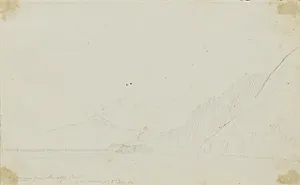
Vesuvius from Amalfi Point
Medium
Drawing
Classification
Drawing
Department
Smithsonian Collection
Museum
Smithsonian American Art Museum
Credit
Smithsonian American Art Museum, Bequest of Martha F. Butler
Accession Number
1991.56.265
Rights
Public Domain
Tags
Art Historical Context
**Vesuvius from Amalfi Point** (1844) is a captivating drawing by American artist Miner Kilbourne Kellogg, capturing the majestic Mount Vesuvius as seen from the scenic Amalfi Point along Italy's dramatic coastline. Created during Kellogg's travels in Europe, this work depicts the volcano in the soft light of morning, evoking the awe-inspiring power of nature that fascinated 19th-century artists and travelers. Vesuvius, infamous for its catastrophic eruption that buried Pompeii in 79 AD, looms as a symbol of sublime beauty and latent danger against the glittering sea and rugged cliffs. As a skilled landscape artist influenced by the Romantic movement, Kellogg used drawing to record vivid impressions en plein air, a technique that allowed for spontaneous yet precise renderings of light and atmosphere. The medium's intimacy highlights his eye for atmospheric effects—the hazy morning glow softening the volcano's profile—distinguishing it from larger oil paintings of the era. Housed in the Smithsonian American Art Museum through the bequest of Martha F. Butler, this piece reflects the era's Grand Tour tradition, where American artists sought inspiration from Europe's ancient wonders and natural spectacles. Today, it invites visitors to ponder the interplay of human history and untamed geology, reminding us of Vesuvius's enduring allure on the storied Amalfi Coast. (198 words)