
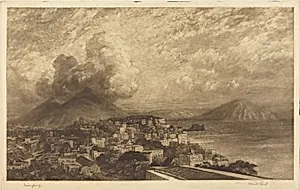
Vesuvius from the Bay of Naples
Medium
mezzotint in black
Dimensions
plate: 28.58 × 45.09 cm (11 1/4 × 17 3/4 in.)
Classification
Department
CG-W
Museum
National Gallery of Art, Washington, D.C.
Credit
Ailsa Mellon Bruce Fund
Accession Number
1974.53.26
Rights
Public Domain
Art Historical Context
This striking mezzotint captures the dramatic silhouette of Mount Vesuvius rising above the shimmering waters of the Bay of Naples. Created in 1895 by British printmaker Frank Short after an original design by George Frederic Watts, the work exemplifies the Victorian era’s fascination with iconic landscapes that blend natural grandeur and historical resonance. Short, renowned for his mastery of reproductive printmaking, translated Watts’s vision into rich tonal depths that evoke the luminous atmosphere of the Italian coast. Mezzotint technique lends particular power to this image, allowing for velvety blacks and subtle gradations of light that mimic the effects of oil painting. By rocking a textured plate to create tiny burrs that hold ink, Short achieved the velvety shadows and glowing highlights that make the volcano appear both majestic and slightly ominous. Such prints played an important role in the late nineteenth century, bringing celebrated artworks to wider audiences through affordable yet high-quality reproductions. Housed in the National Gallery of Art’s collection through the Ailsa Mellon Bruce Fund, the print reflects the enduring appeal of Vesuvius as a subject—its slopes forever linked to ancient catastrophe yet perpetually alluring to artists and travelers alike. Short’s interpretation invites viewers to contemplate both the timeless beauty of the Mediterranean and the technical artistry behind its reproduction.