
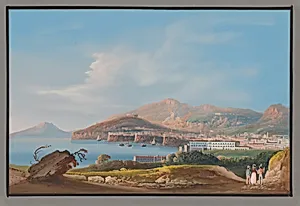
View of Sorrento
1810–40
Medium
Gouache
Dimensions
230 x 321 mm
Classification
Drawings
Department
Robert Lehman Collection
Museum
Metropolitan Museum of Art, New York, NY
Credit
Robert Lehman Collection, 1975
Accession Number
1975.1.558
Rights
Public Domain
Tags
About this artwork
This atmospheric gouache captures the picturesque coastal town of Sorrento during the height of the Grand Tour era. Created by an anonymous Italian artist between 1810 and 1840, the work exemplifies the popular vedute tradition that flourished as wealthy European and American travelers sought artistic souvenirs of their Italian journeys. Sorrento, perched dramatically on cliffs overlooking the Bay of Naples, was a favorite destination for Grand Tour visitors enchanted by its natural beauty and r...
Art Historical Context
Step into the sun-drenched cliffs of Sorrento with this captivating gouache, *View of Sorrento*, by an anonymous Italian artist between 181 and 1840. Part of the Robert Lehman Collection at The Metropolitan Museum of Art, 230 x 321 mm drawing beautifully captures the town's dramatic perch above the Bay of Naples, vista that enchanted travelers during the Grand Tour era. In the 18th and 19th centuries, wealthy Europeans and Americans embarked on the Grand Tour, a rite of passage through Italy's romantic landscapes. Sorrento became a must-see stop, inspiring the vedute tradition—precise, atmospheric views produced as souvenirs. This gouache exemplifies that genre, blending topographical accuracy with idealized beauty to evoke the thrill of Mediterranean adventure. The opaque, vibrant gouache medium was perfect for the tourist market: artists could craft detailed, colorful scenes quickly for sale to visitors or local dealers. These cherished mementos turned personal journeys into lasting art, bridging documentary realism and poetic romance in a single, luminous frame.
About the Artist
Italian
The designation "Italian" in art collections typically refers to an anonymous artist or a loose attribution to works from Italian schools, rather than a specific individual. With 173 known artworks in the museum's collection, this entry likely encompasses paintings by unidentified masters active across various periods, such as the Renaissance, Baroque, or later eras. Early life and personal detail...