
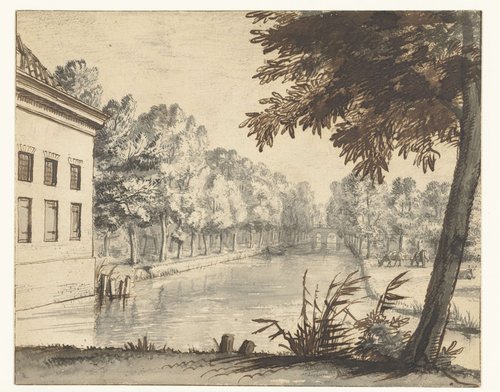
View over a Canal with an Estate
c. 1650 - c. 1699
Medium
pen and brown ink, with brown and grey wash, over graphite; framing line in brown ink (partially trimmed)
Dimensions
202; 163
Rights
Public Domain
About this artwork
Aankoop uit het F.G. Waller-Fonds
Art Historical Context
Abraham Rutgers' *View a Canal with an Estate (c. 165–c. 169) captures the serene beauty the Dutch countryside during the Age. This intimate drawing a tranquil canal vista framed by an elegant estate, evoking the and ingenuity of the Dutch Republic. Rutgers, a lesser-known but skilled draughtsman active in the late 17th century, specialized topographic landscapes that celebrated the nation's reclaimed polders, waterways, and stately country houses—symbols of wealth from trade and land reclamation. Executed in pen and brown ink with brown grey washes over graphite on a modest sheet (163 × 202 mm), the work showcases masterful techniques of the period. Graphite underdrawing allowed precise outlines, while fluid ink lines and subtle washes built depth and atmosphere, mimicking the tonal effects of oil paintings. The partially trimmed framing line in brown ink hints at its origins as a collector's piece, acquired through the F.G. Waller Fund, underscoring its value in preserving Dutch draftsmanship. This artwork reflects the cultural fascination with *landhuizen* (country estates) and the intricate canal systems that defined Dutch identity. As a preparatory study or standalone sketch, it offers a window into everyday 17th-century life, inviting visitors to appreciate the quiet poetry of the Low Countries' engineered paradise.